5 Tips to Create a Fundraising Case for Support
This guest article was written and submitted by Aly Sterling, President and Founder of Aly Sterling Philanthropy. Please see the end of this article for Aly's bio.
By: Aly Sterling

Convincing people to contribute their hard-earned funds to your museum is no easy feat. You must appeal to their hearts and minds in a compelling way and develop a strong case for support.
As Aly Sterling Philanthropy’s fundraising strategy guide explains, your case for support should ultimately answer the question, “Why does our nonprofit deserve donors’ support?” To help you fully answer this question, we’ve developed this guide with expert tips for creating an engaging, persuasive case for support for your upcoming fundraising campaign.
1. Determine your audience.
The most effective appeals are personalized to your audience’s interests and needs. Before you craft your case for support, consider who your audience is and the messaging they would best respond to.
For instance, here’s how you might tailor your case to different supporter segments:
- New supporters: New supporters are eager to help your organization but may need more background information before contributing. Explain your museum’s mission and purpose so new supporters are fully informed.
- Volunteers: Convert volunteers into donors by referencing their service and discussing how monetary contributions can expand their impact. Since volunteers have hands-on experience with your work, emphasize how proper funding makes that work possible.
- Major donors: If you’re running a capital campaign, you’ll likely target major donors. Be sure to thank them for their past generosity and remind them of any special recognition opportunities they’ll receive by participating in this campaign.
Your campaign may target several audiences. In this case, develop a central case for support with slight variations for each segment. For instance, your case for support may have the same general content for all audiences, but you might include a short description of your mission in messaging for new supporters.
2. Communicate your goals.
Once you’ve determined your audience, you must convey your campaign goals to them. To ensure your goals are clear and actionable, use the SMART goal framework, which stands for specific, measurable, achievable, relevant and time-bound.
Check out this example of a SMART goal a museum may develop for its fundraising campaign:
- Specific: We will raise funds to support our new educational program and exhibit about endangered species, using donation revenue to secure speakers, develop educational materials and build the exhibit.
- Measurable: We aim to raise $15,000 to fund the project.
- Achievable: Last year, we raised $12,000 to fund a similar project, so with our expanded donor network, $15,000 seems achievable.
- Relevant: Developing this program and exhibit will provide an enriching experience for members and drive new memberships.
- Time-bound: This campaign will take place over three months.
Ensure your campaign goals align with the overarching goals outlined in your strategic plan. For example, if one of your main strategic goals is to boost member retention, the campaign goal outlined above would align with that objective because the resulting project will engage members and encourage them to stick around.
3. Incorporate storytelling.
While your goal will provide a quantifiable measure to strive for, you should also appeal to your audience’s emotions. Highlight real members, donors, volunteers and staff in your case for support to show how your museum makes a positive impact.
UpMetrics’ nonprofit storytelling guide recommends including the following structural elements in your story:
- Character. Center your story around a main character. This will likely be a stakeholder involved in your museum, such as a member, donor, volunteer or staff member.
- Setting. Describe where the story takes place. In the case of a museum, the setting will likely be the museum itself.
- Plot. Detail the sequence of events that happen to the character. This will be the bulk of your story.
- Conflict. Emphasize the obstacle your character faces. You may include a character vs. character conflict, character vs. society conflict, character vs. nature conflict or character vs. self conflict.
- Resolution. Lastly, wrap up the story by explaining how your museum solved the character's problem and how your work made a positive difference.
For example, you may tell the story of a local college student named Kayla, who conducted a research project on medicinal practices in different cultures:
During her initial research, Kayla struggled to find sufficient information using her school’s online resources. Feeling frustrated, Kayla came to our museum to see if we had anything that could help.
Upon entering the museum, Kayla met a staff member named Julie, who was eager to help. Julie not only pointed out an exhibit that could help Kayla with her research but also put her in contact with an expert on the origins of cultural medicinal practices. With these resources, Kayla successfully completed her thesis and eventually became a museum member to further expand her knowledge.
This example walks the audience through how the museum helped someone, providing an excellent jumping-off point for showing donors how their contributions could support similar students and outcomes.
4. Illustrate the campaign’s impact.
Follow up your story with a broader discussion of how donors can make a difference through their contributions. Communicate campaign impact by answering the following questions:
- What is the ideal outcome of this campaign? Your fundraising goal should give a brief overview of your intended outcome, but here, you can expand on what you’d like to achieve. For example, you may give more details about the educational program you’ll create and how it will teach the community about an important issue.
- Who will it help? Dive deeper into who your campaign will impact. Continuing with the previous example, an educational program and exhibit about endangered species will not only help members learn more but will also support endangered species themselves, as the program will encourage members to donate to different wildlife conservation organizations.
- When will it happen? Give donors a detailed timeline of when you’ll create and implement your project. That way, they’ll better understand when they can see their contributions come to fruition.
Donors want to know that their gifts will make a genuine difference. By offering details of your project, you demonstrate your commitment to using donors’ funds responsibly and boost trust by providing a clear plan for doing so.
5. Include a call to action.
Drive results with an attention-grabbing call to action that accomplishes the following objectives:
- Tell your audience what you’d like them to do. In the case of a fundraising appeal, you’ll ask your audience to donate. In other cases for support, you may call upon supporters to register to volunteer, sign up for an event or renew their membership.
- Be specific about how your audience should contribute. Add specificity to your call to action to simplify your audience’s decision to participate. For instance, asking someone to “Donate $15 today to support our endangered species program” is much more actionable than a simple “Donate today.”
- Show your audience where they need to go. Within your call to action, provide a link to your campaign or donation page. That way, interested supporters can immediately contribute without second-guessing their decision.
Share your case for support across various channels, including email, direct mail and social media. The more your audience interacts with your museum’s messaging, the more likely they are to follow through with a contribution.
A solid case for support is the key to connecting with your audience and driving campaign revenue. If you need help perfecting your case, contact a fundraising consulting firm with the expertise needed to develop a successful case that aligns with your audience and goals.
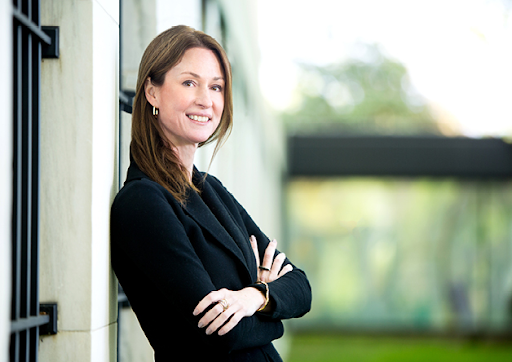 About the author - Aly Sterling
Aly’s decision to start her own business in 2007 was driven by her belief in leadership as the single most important factor in organizational success. She was determined to work with multiple causes at one time to scale societal change.
Today, she manages the strategic direction and growth of her firm while advising select clients on the organizational opportunities that impact their mission success, scalability and sustainability. Aly’s expertise includes fundraising, strategic planning and board development for the well-positioned nonprofit. She recently earned certification in the 21/64 approach to working with multigenerational families with funds, foundations and other philanthropic enterprises.
Aly is regularly sought for comment by trade and mainstream media, including the Chronicle of Philanthropy and U.S. News & World Report. She is a frequent presenter for regional and national organizations including NetJets, Owens Corning, Philanthropy Ohio, Ronald McDonald House Charities, Boys & Girls Clubs of America, and First Tee.